• Adventure Strip Finales

    Having premiered January 3, 1977, The Amazing Spider-man comic strip officially ended its run on October 21, 2023.

    It had been in reprints since Roy Thomas and Alex Saviuk‘s run on the strip had come to an end. March 17, 2019 was their last Sunday with March 23, 2019 being the last daily.

    Amazing Spider-Man – Roy Thomas, Alex Saviuk and Joe Sinnott
    March 17, 2019
    Amazing Spider-Man – Roy Thomas, Alex Saviuk and Joe Sinnott
    March 23, 2019

    The Spider-Man strip started in January of 1977 written by Stan Lee and drawn by John Romita. Following Stan Lee’s run on the strip Roy Thomas had written the strip uncredited for a number of years (more on that at SyFy.com). Artists that followed Romita included Fred Kida, Larry Lieber, and most recently Alex Saviuk with Joe Sinnott inks.

    After the announcement of the strip’s finale, Joe Sinnott’s son Mark posted the following to his Dad’s Facebook page.
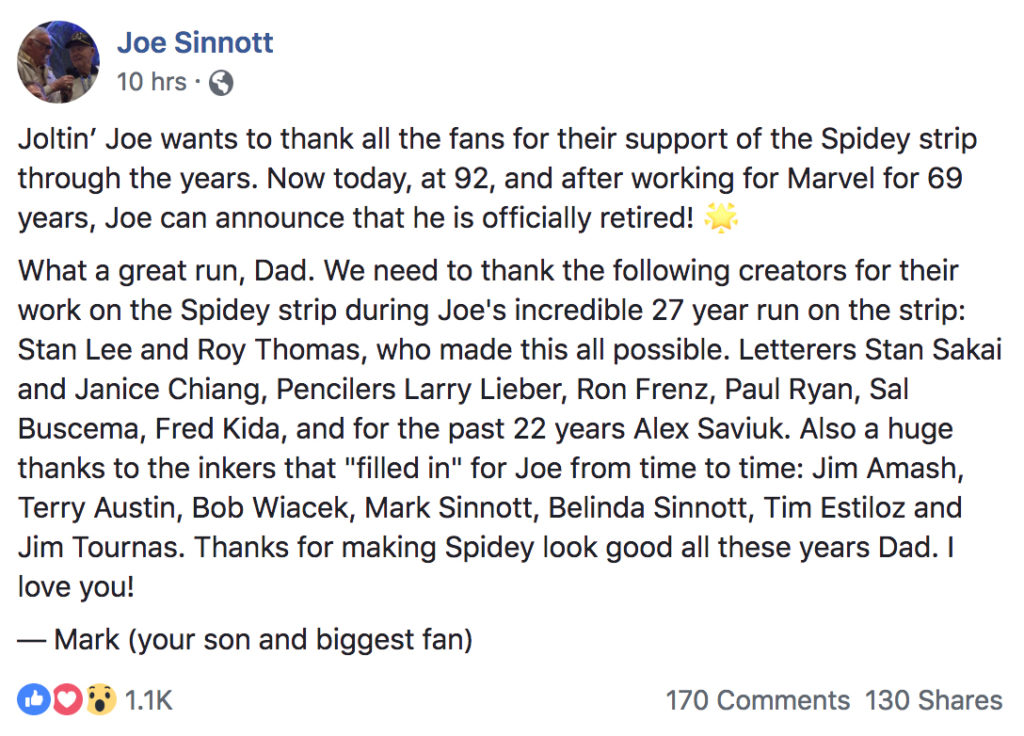
    The following year, Joe Sinnott passed away (October 16, 1926  – June 25, 2020). Truly the end of an era!

    With adventure strips being far and few between on today’s comics page, I thought it would be of interest to look at a few notable comic strip finales.

    Note: Thanks to Allen Lane who posted a number of these to the Yahoo Classic Adventure Comic Strip Group.


    Buz Sawyer was created by Roy Crane and first appeared November 1, 1943. Crane worked on the strip until his death in 1977.

    For more in-depth info on Buz Sawyer I defer to Ray Contreras for the following info.

    Henry (Hank) Schlensker joined Crane right after the war (Schlensker had been a flyer in the war) and started working on the BUZ Sundays as soon as he joined Crane in 1946.  In 1950, looking to ease his workload on the daily strip, Crane moved Schlensker from the Sundays to the daily strip.  Around 1969, due to chronic ulcers, Roy Crane stepped back from the strip completely.  Ed Granberry, who had been assisting on the writing, took it over completely; and Schlensker worked on the art for the daily, as he had basically for many, many years; only now without Crane’s involvement.  Clark Haas and later Al Wenzel drew the Sunday after Crane switched Schlensker to the daily.  Crane would look at the finished product, but after working years on the strip (both daily and Sunday), Schlensker and Granberry knew their stuff.

    Henry (Hank) Schlensker continued on Buz Sawyer after Crane’s death in 1977. After Schlensker’s retirement John Celardo took the reigns, working on Buz from 1983–1989. Upon Celardo’s sign-off, King Features discontinued the strip.
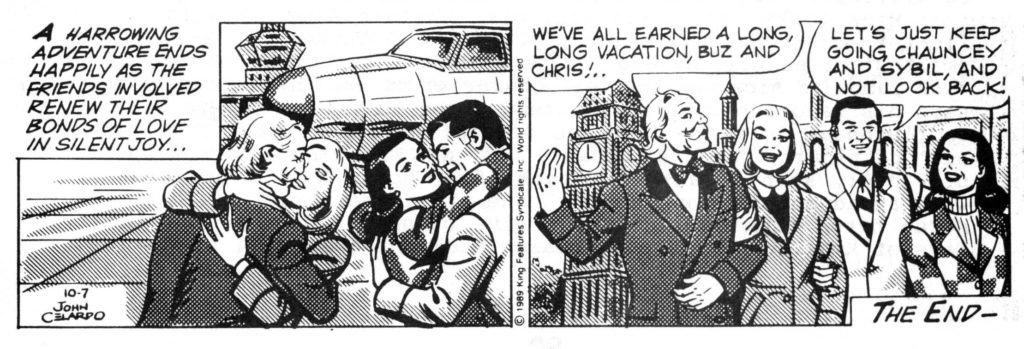
    Buz Sawyer – John Celardo
    October 7, 1989

    Buck Rogers by writer Philip Francis Nowlan and artist Dick Calkins debuted on January 7, 1929. Writers following Nolan included Rick Yager (who also drew it), Jack Lehti, Ray Russell, Fritz Leiber and Howard Liss. Artists following Calkins included Russell Keaton, Rick Yager and George Tuska.

    Howard Liss and George Tuska’s finale strip appeared June 13, 1965.

    Buck Rogers – Howard Liss and George Tuska
    June 13, 1965

    The strip was given a second life in 1979 by writer Jim Lawrence and artist Gray Morrow, followed by writer Cary Bates and artist Jack Sparling. The finale strip appearing December 25, 1983.

    Buck Rogers – Cary Bates and Jack Sparling
    December 25, 1983

    One of the most memorable finales for a comic strip happened before the strip in question actually even ended. I’m talking of course of Milton Caniff’s Terry and the Pirates.

    Looking to have the financial stability of ownership of his strip (something Caniff was denied at Tribune-News Syndicate with Terry), he accepted an offer from the Field Newspaper Syndicate to create a new strip that he would have ownership of. That strip would be Steve Canyon.

    In Caniff’s iconic final Sunday page Terry says goodbye to Jane Allen as Caniff says goodbye to his Terry and the Pirates readers.

    The story so far – Romance is in the air for Terry and Jane Allen until it’s discovered that her old flame, Snake Tumblin, is still alive and in a base hospital somewhere in Australia. Sacrificing his own happiness, Terry secures Jane a flight and escorts her to the airfield…
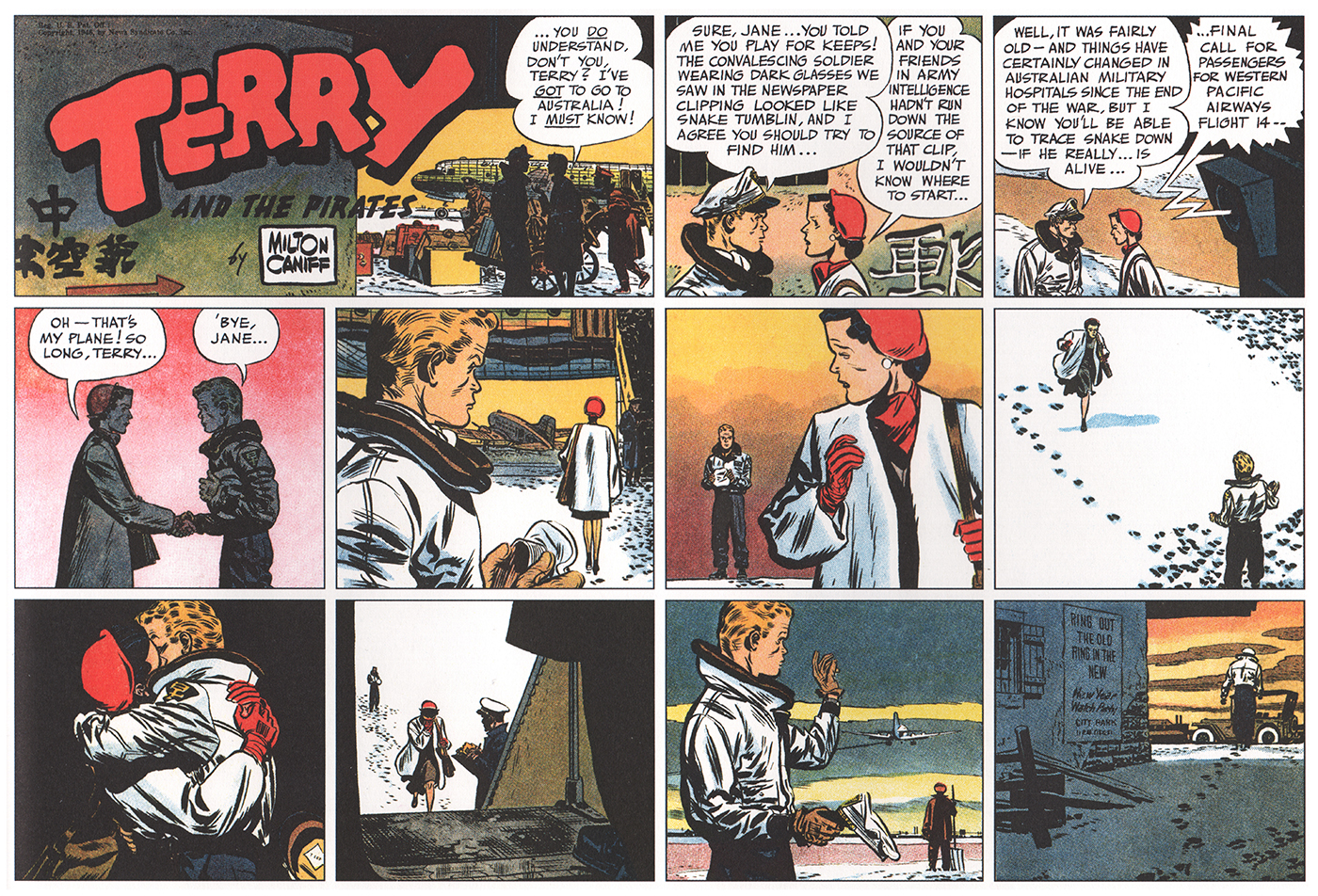
    Terry and the Pirates – Milton Caniff
    December 29, 1946

    That last panel is the killer as Caniff adds a double meaning to the writing on the wall.

    As pointed out by R.C. Harvey in the foreward to the Complete Terry and the Pirates Volume 6, the Sunday page was not the last strip Caniff drew. Because the Sunday pages were due well in advance of the dailies, the following daily strip – printed the day before the momentous final Sunday page – was actually the last strip drawn.
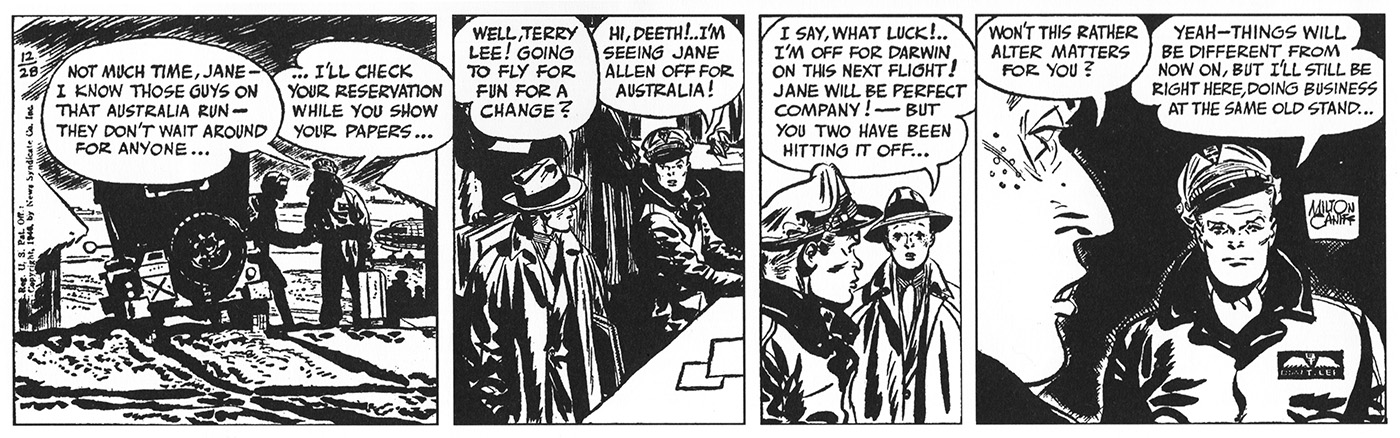
    Terry and the Pirates – Milton Caniff
    December 28, 1946

    Caniff’s replacement on Terry and the Pirates would be George Wunder, who would go on to draw the strip for another 26 years. Here’s Wunder’s last Sunday page.

    Terry and the Pirates – George Wunder
    February 25, 1973

    Terry and the Pirates would be revived in 1995 by Michael Uslan with art by the Brothers Hildebrandt. The following year they left the strip and were replaced by writer Jim Clark and artist Dan Spiegle. A year after that the strip was discontinued.

    Terry and the Pirates – Jim Clark and Dan Spiegle
    July 27, 1997

    Secret Agent X-9 began on January 22, 1934. It was created by writer Dashiell Hammett (The Maltese Falcon) and drawn by artist Alex Raymond (Flash Gordon). Writers that followed Hammett in those early years included Don Moore and Leslie Charteris. The artists that followed after Raymond left the strip were Nicholas Afonsky and Austin Briggs. In the 1940s Mel Graff took over the writing and drawing chores, followed by Bob Lubbers (pseudonym “Bob Lewis”) in the 1960s.

    From 1967 to 1980 the strip was written by Archie Goodwin and drawn by Al Williamson and relaunched as Secret Agent Corrigan. Here’s Goodwin and Williamson’s last strip from February 2, 1980.

    Secret Agent Corrigan – Archie Goodwin and Al Williamson
    February 2, 1980

    Following Goodwin and Williamson was veteran cartoonist George Evans. Evans would write and draw the strip until 1996. Upon Evans’s decision to retire from producing the strip, King opted to discontinue it.

    Secret Agent Corrigan – George Evans
    February 10, 1996

    Another comic strip Alex Raymond started back in 1934 was the topper to his famous Flash Gordon strip, and that was Jungle Jim. Artists that followed Raymond on the strip were John Mayo and Paul Norris. After a 20 year run Jungle Jim wrapped up in 1954.

    Jungle Jim – Paul Norris
    August 8, 1954

    Rip Kirby premiered March 4, 1946 and was also created by Alex Raymond. Raymond’s work on Rip Kirby would win him the Reuben Award in 1949 for “Outstanding Cartoonist of the Year.”

    Alex Raymond’s career was cut short in 1956, when at age 46, he was killed in a car crash. King Features sought out a replacement and found it in John Prentice. After John Prentice died in 1999 (after an amazing 43 year run on Rip Kirby) the decision was made by King Features to discontinue the strip. Frank Bolle would ghost the final week (to “ghost is when an artist fills in for another artist by mimicking his style).

    Rib Kirby – Ghosted by Frank Bolle
    June 26, 1999

    And apologies for the small image. It’s the only size I could find it in.


    Alex Raymond’s most renowned comic strip, Flash Gordon, first appeared January 7, 1934. It has had a number of artists and writers over the years (myself included), some of whom I highlighted on this Sunday page.

    Flash Gordon – December 26, 1999.

    Quick side note: Dan Barry‘s assistant, Bob Fujatani (October 15, 1921 – September 6, 2020), gave a great interview in 2019 to the the Connecticut Post talking about his career in comics.

    Here’s the link: At 97, Flash Gordon Artist Bob Fujitani Remembers Cartooning’s Golden Age


    The Flash Gordon Dailies were discontinued on two occasions. The first in 1944 shows Flash, Dale and Dr. Zarkov in a ticker tape parade having returned from Mongo after successfully saving the Earth.

    Flash Gordon – Austin Briggs
    June 3, 1944

    The dailies were revived in the 1950s with artist Dan Barry at the helm. In 1990 the dailies were taken over by Bruce Jones as writer and Ralph Reese as artist, followed by artist Gray Morrow upon Reese’s departure. A Buenos Aires studio of artists were hired in 1991 with writing alternating between Kevin Van Hook and Thomas Warkentin. The last daily would be in 1993

    Flash Gordon – Thomas Warkentin and a Buenos Aires studio
    July 3, 1993

    Meanwhile the Flash Gordon Sunday page had been running continuously since 1934. I started my tenure writing/drawing Flash on January 21, 1996. It was a fun run, but after a failed contract renegotiation, I deciding to bow out. My last strip, and Flash Gordon’s finale, appeared March 16, 2003.

    Flash Gordon – Jim Keefe
    March 16, 2003

    The inspiration for my sign-off was the ending of the first Flash Gordon serial starring Buster Crabbe (Flash Gordon), Jean Rogers (Dale Arden) and Frank Shannon (Dr. Zarkov).

    Flash Gordon serial – 1936

    Originally I had a slightly more surreal ending planned in a Sunday page I did in collaboration with Mutts creator Patrick McDonnell. It was never meant to be though as the page was rejected by the editor up at King Features – his thoughts being “It really didn’t work as a Flash Gordon page.”

    Patrick did an end run though and asked the editor, that if it wasn’t going to see print as a Flash Gordon page, could it be used as a Mutts page. The go ahead was given and it eventual saw print on March 23, 2003 as a Mutts Sunday page (with the Flash Gordon title kept intact).
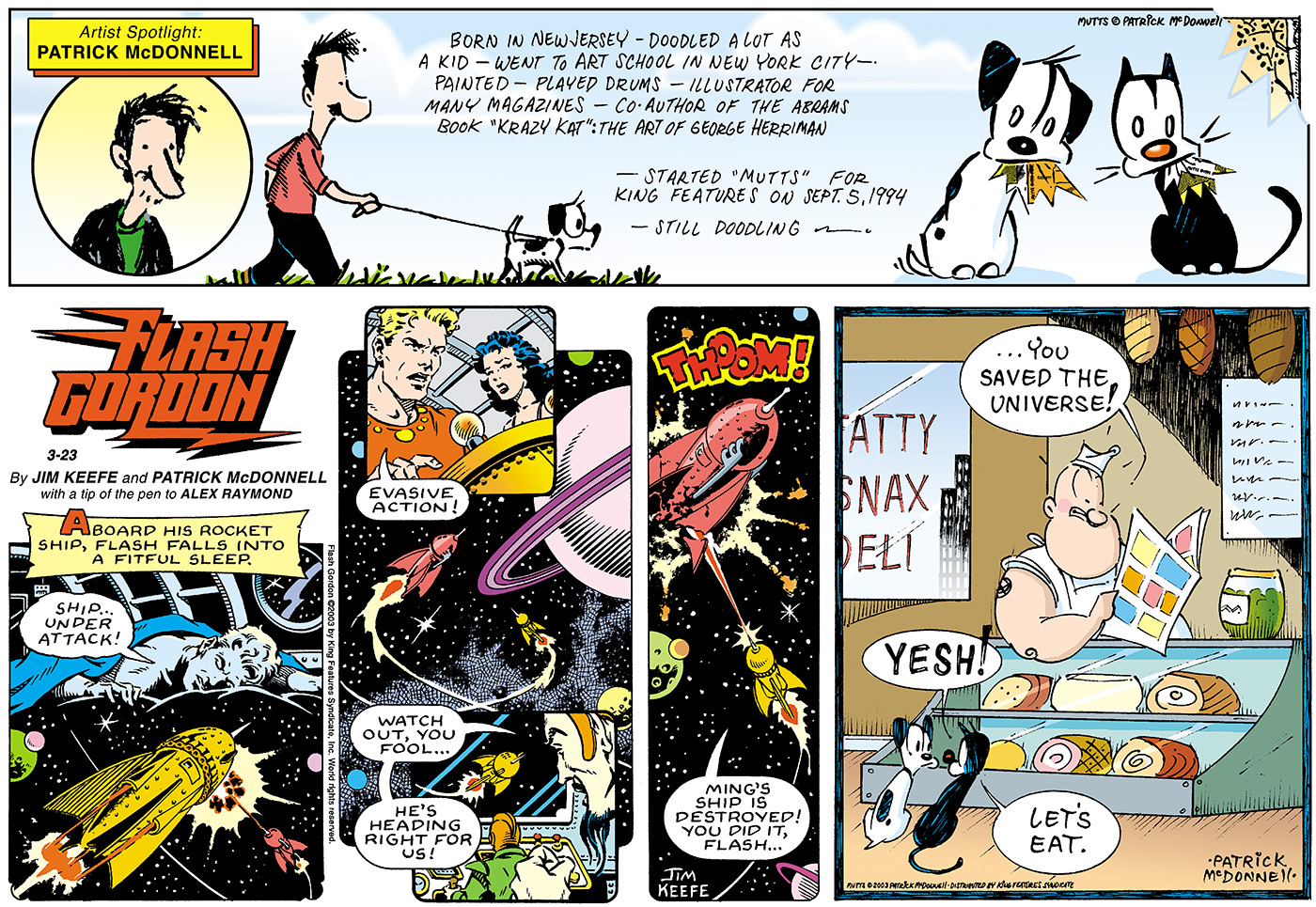
    Mutts – Jim Keefe and Patrick McDonnell
    March 23, 2003

    UPDATE:
    After 20 years of reprinting my run on the strip, King Features finally relaunched Flash Gordon January of 2024 with writer/artist Dan Schkade taking the helm.

    You can follow Flash’s new adventures on Comics Kingdom.
    Not to be missed!

    Last but not least, check out the Daily Cartoonist for a Jim Keefe Bonus Round – where D. D. Degg follows up my comic strip finales with a list of when they first premiered.

    Here’s the link…
    First and Last – a Jim Keefe Bonus Round

  • Company I

    This web page is dedicated to my Dad, Richard Keefe, and all the men who served with him in the 76th Infantry Division.

    Company I
    304th Infantry Regiment
    76th Infantry Division

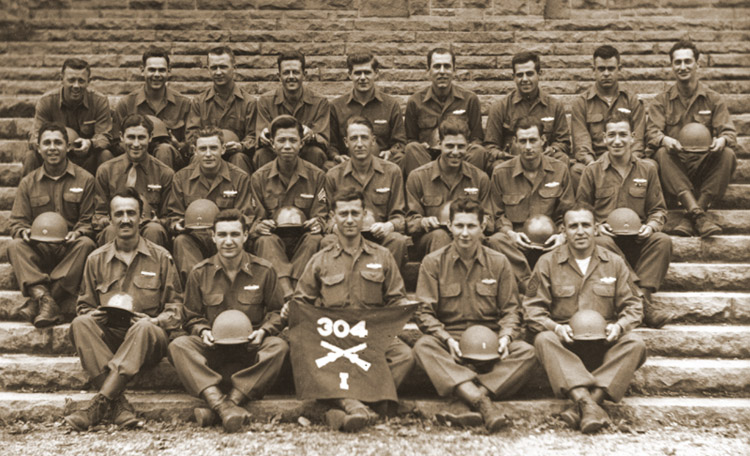
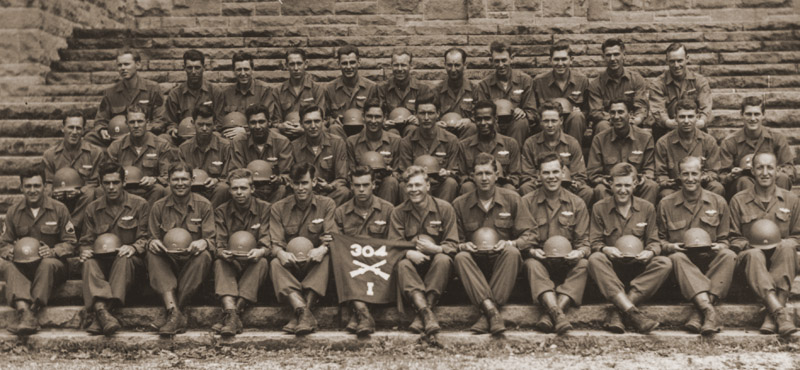
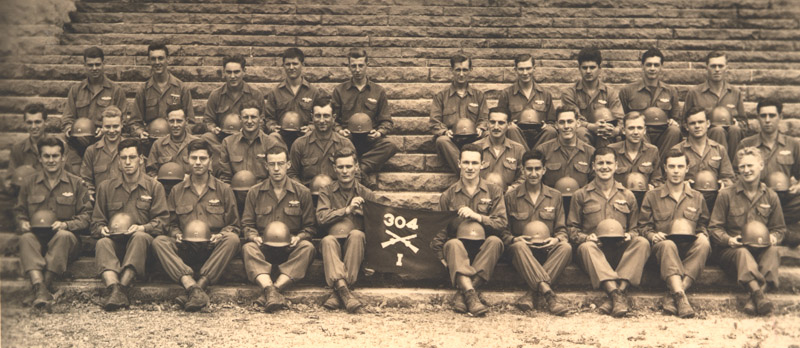
    Company I – 304th Infantry Regiment – 76th Infantry Division
    Camp McCoy, Wisconsin – November 1944

    Photo courtesy of Jay Hamilton LTC USA (Ret)

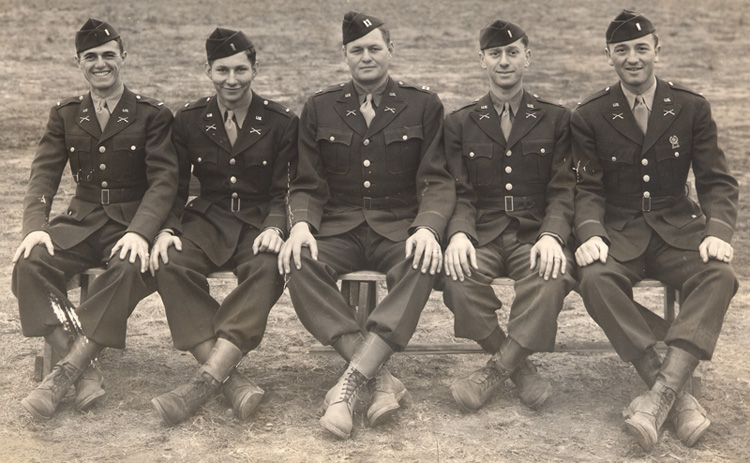
    The Commissioned Officers of Company I. This picture was taken at Camp McCoy, Wisconsin in November of 1944.

    (Left to Right) 2nd Lieutenant Steve Galanas, 2nd Lieutenant Richard Keefe, Captain Don Rue Hickman, 1st Lieutenant Donald Katz, 2nd Lieutenant Jay Hamilton


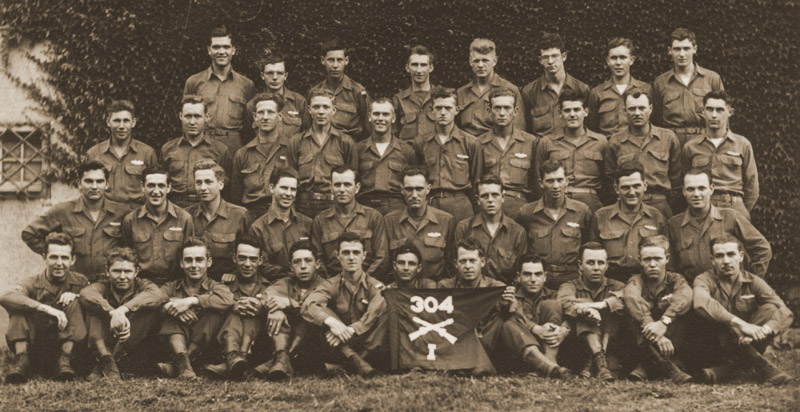
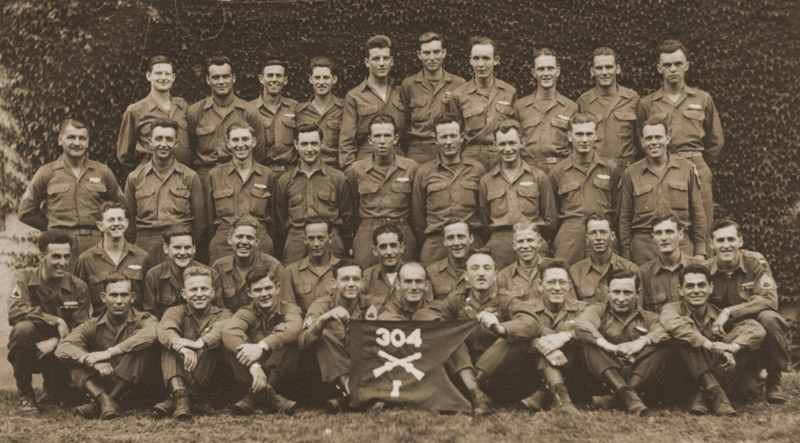
    The following pictures were taken May of 1945, after V-E Day, while occupying the town of Schmölln, Germany.

    Company Headquarter – May 1945

    First Row – Bottom: S/Sgt. Lo Russo, 2nd Lt. William Richard, Capt. Donald Katz, 1st Lt. Richard Keefe, 1st Sgt. Anthony Fackelmann

    Second Row: T/5 Raymond Martinez, Pfc. William Bankston, Sr., Pfc. Harold Suesse, T/4 Fong Him, Pfc. Marvin Trammel, Pfc. Jean Stephens, Pfc. Kenneth Hague, Pfc. Milton Schwartz

    Third Row: Pfc. George Mortimer, Cpl. Earl Annis, Pfc. William Hedden, Pfc. Olland Seymour, Pfc. Thomas Geary, T/5 Malvin Leykauf, T/5 Philip Karas, Pfc. Elbert Dove, Pfc. Bernard Rosenburg

    Not Pictured: T/5 James Bailey, Pfc. Tim Brooks, Pvt. Karl Cunningham, Pfc. Cleon Duke, Pfc. Frederick Echsner, Pfc. Fred Ethington, Sgt. Harvey Fowler, Pvt. Richard Gardner, S/Sgt. Philip Gillis, T/5 Anthony Grunder, Sgt. Donald Hawley, 1st Lt. Edward Hurley, Pfc. William Jones, Pfc. Ralph Kierski, Sgt. Jay Lachot, Pfc. Morris Levy, T/5 George Livernois, T/5 John Macomber, T/5 Lucien Nadeau, Pfc. Abel Parks, Pfc. Raymond Radtke, Pfc. Jack Sapoznik, Pfc. Elmer Slate, Pfc. James Thomson


    First Platoon – May 1945

    First Row – Bottom: S/Sgt. John Beardsmore, Pfc. Joseph Kopper, Pfc. Lester Ward, Pfc. Howard Kelly, Pfc. John Neggia, ist Lt. Steve Galanes, Pfc. Tobias Gutierrez, T/5 Kermon Silver, Pfc. Julius Yellen, Pfc. James Quinn, Pfc. Arvel Rice, Pfc. Leroy Gansereit

    Second Row: Sgt. Paul Kmett, Pfc. Lester Isaacs, Pfc. Robert Leonard, Pfc. Wilburn Rundle, T/5 Lawrence Beasley, Pfc. John Bozich, Pfc. Leonard Watson, Pfc. Douglas Johnson, Pfc. Edward Algas, T/5 Wallace Maze

    Third Row: Pfc. Lloyd Brink, Pfc. Calvin Belue, Pfc. Richard Doucett, Pfc. Guy Stump Jr, Pfc. Richard Pfeiffer, Pfc. Ulysses Rogers Jr, Pfc. Joseph Kudyba, Pfc. Ernest Kaszian, Sgt. Zack Parsons, Pfc. Paul Henzarek

    Fourth Row: S/Sgt. James Harris, S/Sgt. Sigmund Romanowski, Pfc. Joseph Todd Jr, S/Sgt. Thomas Rogers, Sgt. George Bailie, Pvt. Bobby Booz, Pfc. Carl Tillman, Pfc. John Pajor

    Not Pictured: Sgt. Frank Favata, T/Sgt. Bernard Kelleher Jr, Cpl. Edwin Palmquist


    Second Platoon – May 1945

    First Row – Bottom: Pfc. Joseph Caroll, Pfc. Wayne Thompson, Pfc. George Blount, S/Sgt. Joseph Zellner, Sgt. Arthur Martinez, 2nd Lt. Jay Hamilton, S/Sgt. Palmer Kittelson, Pfc. Frederick Rosenberry, Pfc. Raymond Gold

    Second Row: S/Sgt. Wilson Thompson, Pfc. Charles Simmons, Pfc. Mark Tomasek, Pfc. Martin Silverman, Pvt. Kenneth Beckman, Pvt. Samuel Morbit, Pfc. Carl Canterbury, Pfc. John Needum, Pvt. Charles Banks Jr, Pfc. Lorel Roestel, S/Sgt. Roland Dubois

    Third Row: Sgt. Michael Sapalik Jr, Pfc. James Wood, Pfc. Ernest Lege, Pfc. Alphie Gagnon, Pfc. Peter Motherway, Pfc. Clarence Hornsby, Pfc. Jack Adams, Cpl. Bernard Rish, T/5 Robert Laselle

    Fourth Row: Cpl. Charles Hawk, Pfc. Larry Gleaton, Pfc. Johnny Cochran, Pfc. Jack Burns, Pvt. Martin Gorneault Jr, Pfc. Curtis Fellure, Pfc. Hugh Maguire, Pfc. John Odgers Jr. Pfc. Harry Paff, Pvt. George Bergen

    Not Pictured: Pvt. Herman Hahler, Pvt. Kenneth Obrecht, 2nd Lt. Charles Sands III, Pfc. Francis Schott, T/5 Olvin Stephens, Pvt. Albert Sutton


    Third Platoon – May 1945

    First Row – Bottom: S/Sgt. Silvio Zinicola, S/Sgt. Anthont DiMare, Pfc. Jesse Slovacek, Pfc. George Bowden, Pfc. Paul Sanderson, Pfc. Wayne Hardy, Pvt. Alphie Leblond, Pfc. Robert Wendell, Pfc. Leo Goldenstein, Pfc. R. G. Johnston, Pfc. William Norford, Sgt. James Mulligan

    Second Row: S/Sgt. Walter Williams, S/Sgt. James Cotton, Pfc. Kenneth Morgan, Pfc. Salvador Vasquez, Pfc. Henry Kopinski, Pfc. Glendon McGee, Pfc. William Bowles, Pfc. Manuel Rivera, Pfc. Lewis Maker, Pfc. Thomas Fichera, Cpl. Joseph Grasso, Pfc. Donald Trexler

    Third Row: S/Sgt. George Hatcher, Pfc. Harold Sharp, Pfc. James Turner, Pfc. Clarence Deaton, Pfc. Woodrow Dunn, Cpl. Arthur Carlson, T/4 Robert Steiger, Pvt. Clifford Dilla, Pfc. Curtis Spencer, Pvt. Donald Howland, Sgt. Verner Drake

    Not Pictured: Pfc. Frank Ceniceros, Pvt. Marvin Gerstin, Pfc, Pedro Lopez, T/Sgt. Frank Mucedola, Pfc. Ashel Shults Jr, Pfc. Eugene Tortolano


    Weapons Platoon – May 1945

    First Row – Bottom: Sgt. Theodore Pleasants, Pfc. Richard Cook, Pfc. Edward Borgoyn, Pvt. Charles Pawlowski, Pfc. Malcolm Kerr, Sgt. Eugene Sharp, Pfc. Myron Chaderjian, Pfc. William Brockerman, Pfc. Frederick Hannon, /Sgt. William Neil

    Second Row: Sgt. Donald Pessimier, Pfc. Ted Cook, Pfc. Ben Hensley, Pvt. Alfred Gwara, Pfc. George Kline, Cpl. Irwin Cohen, T/5 Samuel Jones, Pfc. Jesse Addington, Pfc. William Davis, Pfc. Donald Hepfer

    Third Row: Sgt. John Scott Jr, Pfc. Norman Alderman, Pfc. Wesley Simmons, Pfc. Norman White, Pfc. Keith Hier, Cpl. Howard Landefeld, Pfc. Richard Hooley, Pfc. John Jardini, Pfc. Dale Roth, Pfc. Frederick Stefansen

    Not Pictured: 1st Lt. Robert Conrad, S/Sgt. Charles Miller, Sgt. Ernest Wagganer

    The following video includes pictures of my Dad’s, pics from Don Katz and also Jay Hamilton.

    Links

    German City Honors 76th Division – Frank Mucedola

    Schmölln, Germany

    John Neggia I-304-76

    Lt Richard Keefe – Nuremberg, Germany


    Richard Keefe 1925-1992

    Brig. Gen. Don Rue Hickman 1918-2005

    Frank Mucedola 1921-2007

    Jay M. Hamilton 1921-2008

    Donald Katz 1916-2011

    Lorel Wayne Roestel 1924-2020

    Memorial Day: Robert Lee 1925-1945
    Roll of Honor – Those Killed in Action

    Unless otherwise specified, the preceding pictures are courtesy of Don Katz. Don Katz began with I-304-76 as a First Lieutenant. By the war’s end he would be Captain of Company I.

    I would like to thank Don Katz and the following veterans who have graciously assisted me in my research.

    Jay Hamilton
    Don Rue Hickman
    Lester Isaacs
    Sam Jones
    Frank Mucedola
    John Neggia

    If interested to see the catalyst for how this research and web page came together, check out: 
    Company I – Patreon

  • Richard Keefe 1925-1992

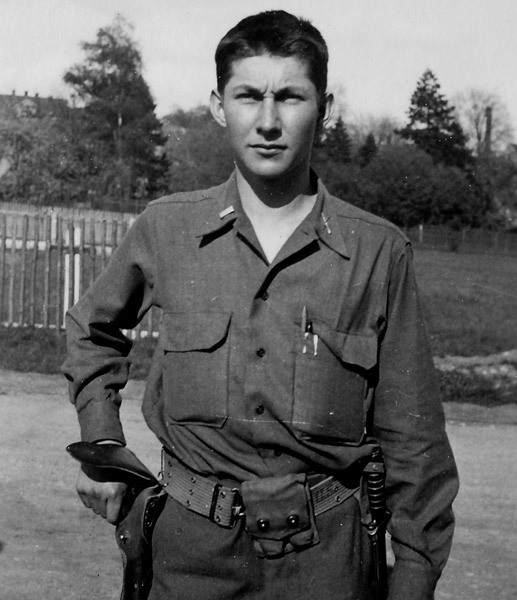
    Richard James Keefe
    November 19, 1925 – October 15, 1992


    Military History

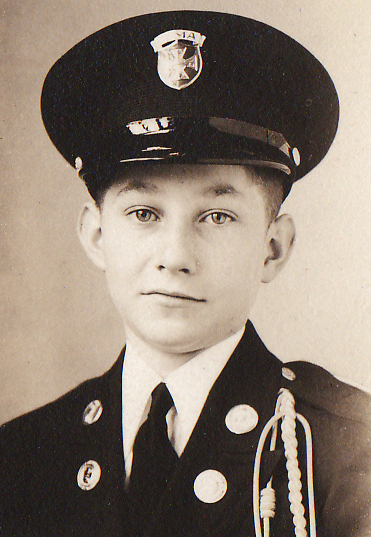
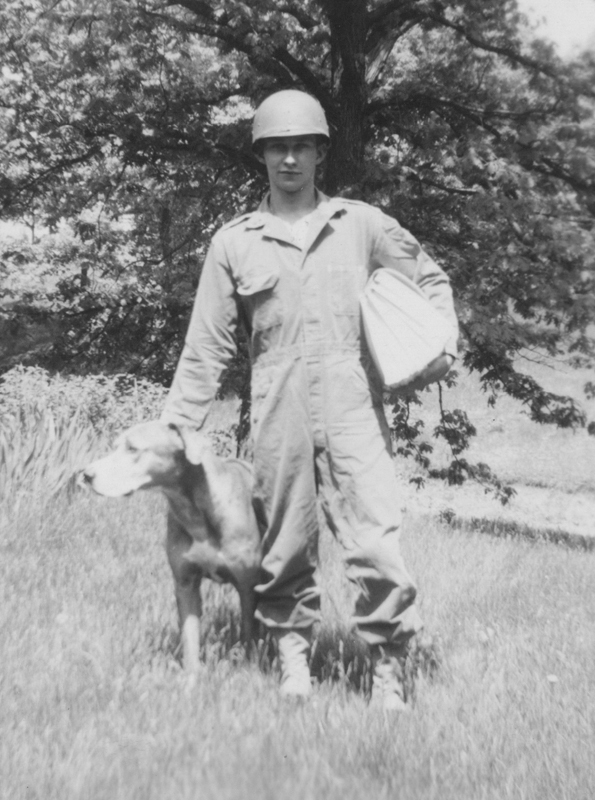
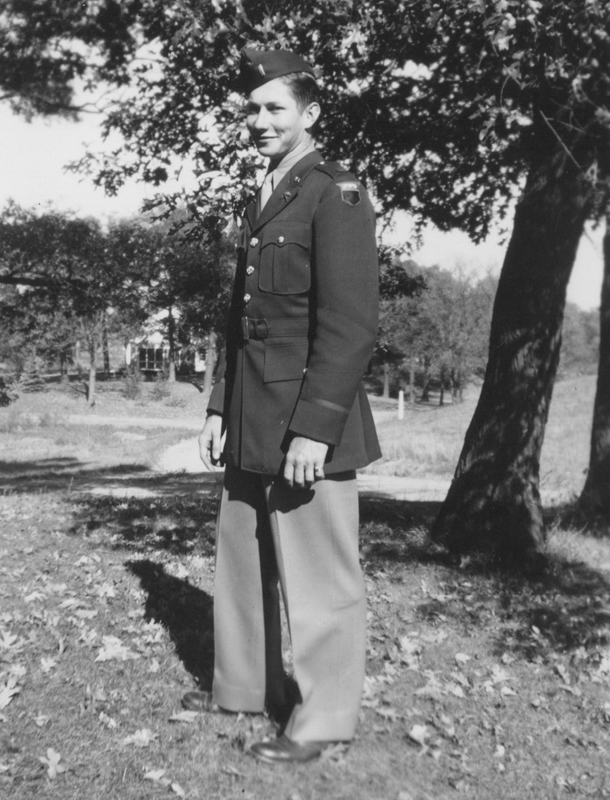
    Enlisted 17 May 1943 to accept an appointment from St. Thomas Military Academy to Infantry Officers’ Candidate School. Reported for Active Duty on 18 Dec. 1943 with rank of Corporal. Was commissioned 2nd Lieutenant, Infantry, at Fort Benning, Ga., 23 May 1944. Served as Rifle Platoon Leader and Executive Officer with Company I, 304th Infantry, 76th Division, in the United States for six months and in the European Theatre of Operations for eight months. Participated in Rhineland, Ardennes, and Central Europe Campaigns. Was awarded the Bronze Star Medal for valor. Was promoted to 1st Lieutenant during combat in April 1945.

    Served with the 3rd Battalion, 26th Infantry, 1st Division, at the war trials in Nürnberg , Germany. Served as Headquarters Company Commander, 3rd Battalion, 26th Infantry, and motor officer for the International Military Tribunal. Was promoted to the rank of Captain in August 1946, and was separated at Fort Dix, New Jersey on 14 October 1946.

    Awards:
    Bronze Star Medal, Combat Infantry Badge, American Campaign Medal, European-African Middle Eastern Campaign Medal – with 3 battle stars, World War II Victory Medal, Army of Occupation Medal, Reserve Medal.

    Army Reserve:
    Joined the Army Reserve in 1947 and was assigned to the 409th Infantry Regiment, 103rd Division. Served as Regimental Motor Officer, Infantry Regiment, 103rd Division. Served as Regimental Motor Officer, Assistant Regimental Plans and Training Officer, Regimental Plans and Training Officer, and Regimental Supply Officer.

    Short Tours of Active Duty while in Reserve:
    Active duty training with Minnesota Senior Army Instructor, Fort Snelling, 13 June 1949. Satisfactorily completed Amphibious Warfare Indoctrination Course, U.S. Naval Amphibious Base, Coronado, Calif., from 11 Sept. 1949 to 26 Sept. 1949. Satisfactorily completed the Infantry School Associate Infantry Officer Advanced Course, Class #3, Fort Benning, Ga., from 2 April 1951 to 29 July 1951.

    Reserve Activities:
    Attended weekly Reserve meetings on Tuesday Nights in addition to a two-week tour of duty every year, usually the last two weeks of August.

    Appointed Reserve Commissioned Officer grade of Major in the Army of the United States on 6 September 1955.

    Appointed Reserve Commissioned Officer grade of Lieutenant Colonel in the Army of the United States on 5 September 1962.

    Richard Keefe retired with the grade of Lieutenant Colonel.

    For More info from WWII go to Company I

    Obituary from 1992

    Richard J. Keefe, age 66, of Golden Valley. Survived by wife, Dolores; daughter & son-in-law, Julianne & Kyle Jenson; sons and daughters-in-law, Michael & Elizabeth, Paul & Jodie, Timothy & Diane; sons, Thomas, James, Nicholas, Gregory; 15 grandchildren; sister, E. Patricia & husband, Donald Whittredge; brothers and sisters-in-law, J. Byrne & Helen and David & Peggy Keefe, and nieces & nephews. Preceded in death by brother, John and sister, Mary Keefe; sons, baby twin boys Keefe. 

    Member of Serra Club of Hennepin-Twin Cities, American Society for Quality Control, and Retired Officers Club. Life member of Reserve Officer Association. Active in the Church of the Good Shepherd, Good Shepherd School, and Benilde-St. Margaret’s High School.

    Funeral Monday, 9:30 am from Gearty-Delmore Robbinsdale Chapel, 39th & W. Broadway, and Mass of Christian Burial 10 am at the Church of the Good Shepherd, 145 Jersey Ave. S. Interment Ft. Snelling. Friends may call 4-7 pm Sunday. Prayer Service 5 pm Sunday. Memorials preferred to Good Shepherd Parish or Hospice Program at North Memorial Medical Center.

    Pictures

  • Dick Keefe – Hoofer

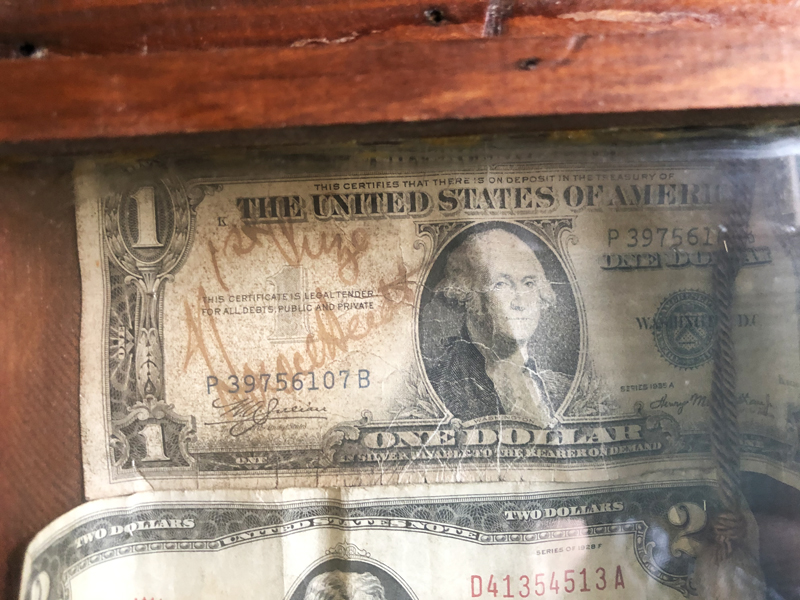
    Dick Keefe wins 1st Prize at a dance contest and gets an autographed bill from the famous band leader, Horace Heidt.

    A little back story on the 1st prize Dick Keefe won at a dance contest hosted by the famous band leader Horace Heidt and his Musical Knights.

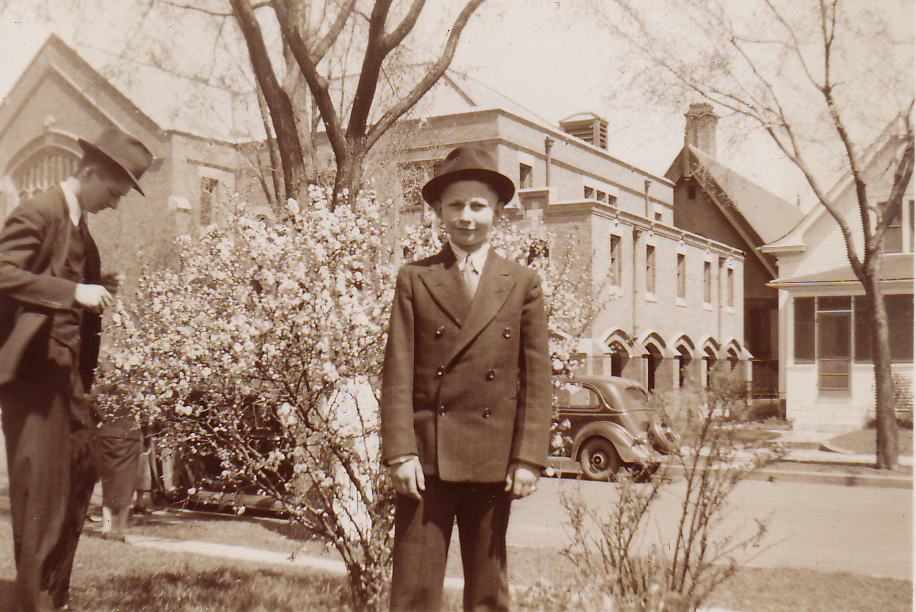
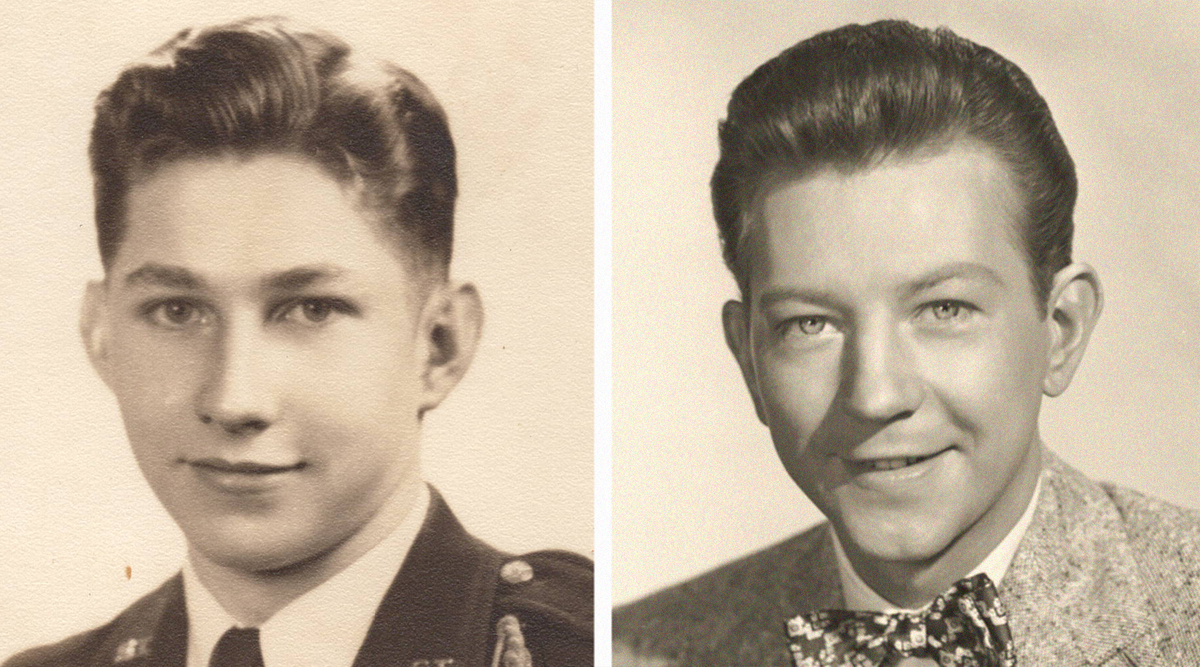
    Family relations say a youthful Dick Keefe bore a resemblance to another Irish hoofer, actor Donald O’Connor.

    Dick Keefe in 1943 on left, Donald O’Connor on the right.

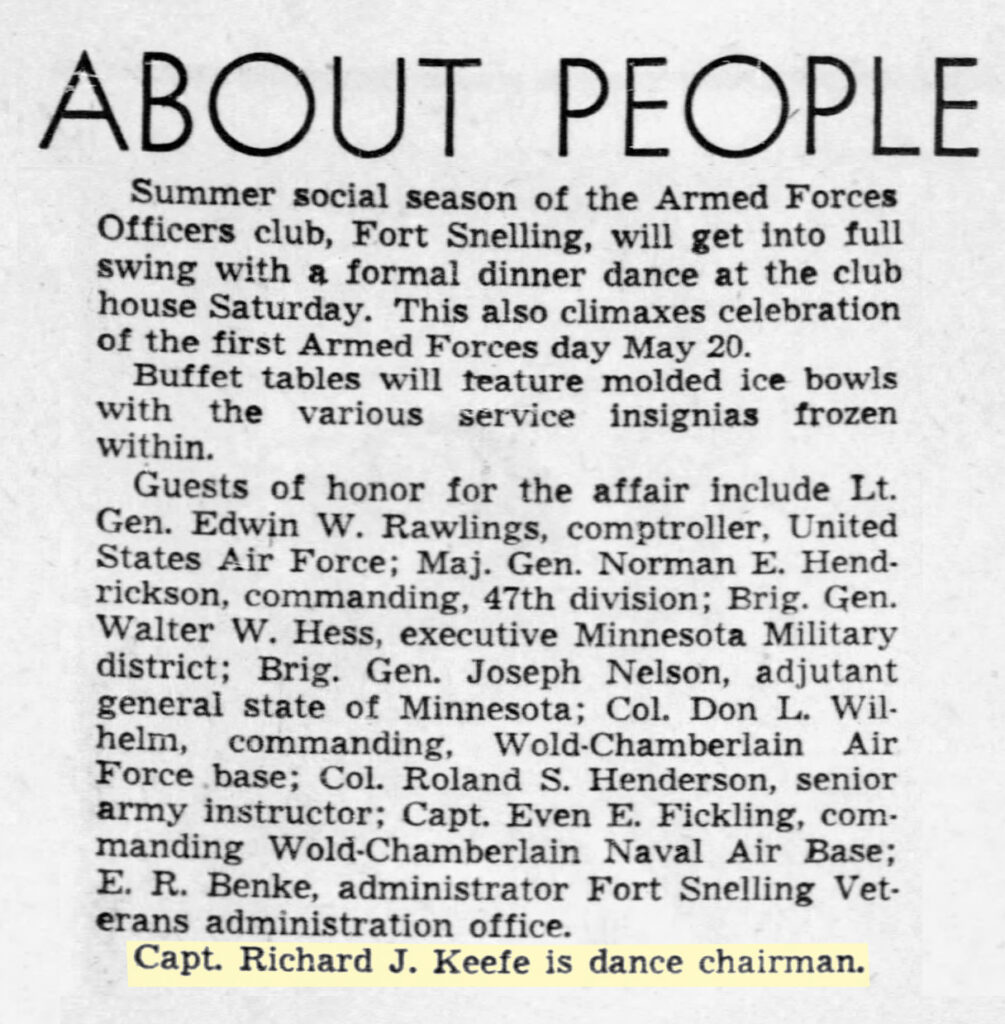
    By 1950 Captain Richard J. Keefe was the dance chairman at the Armed Forces Officers Club near Fort Snelling, Minnesota.

    Minneapolis Morning Tribune – May 16, 1950

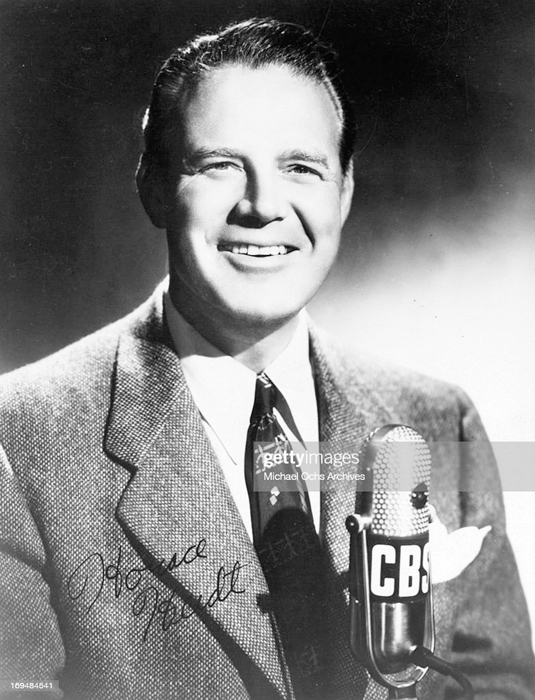
    Horace Heidt
    (May 21, 1901 – December 1, 1986)

    Big band leader Horace Heidt poses for a portrait in circa 1945. (Photo by Michael Ochs Archives/Getty Images)

    Horace Heidt was an American pianist, big band leader, and radio and television personality. His band, Horace Heidt and his Musical Knights, toured vaudeville and performed on radio and television during the 1930s and 1940s. From 1932 to 1953, he was one of the more popular radio bandleaders, heard on both NBC and CBS.

    Heidt and his band played on the NBC Pot o’ Gold radio show (1939–41). The 1941 film Pot o’ Gold, starred James Stewart and Paulette Goddard, featured Heidt portraying himself with his band.

    Here’s a link to Horace Heidt and his Musical Knights circa 1950, around the time Dick Keefe won the dance contest.
    Building a Band – Horace Heidt and his Musical Knights


    The following are two Minneapolis venues that Horace Heidt and his Musical Knights were known to have played.

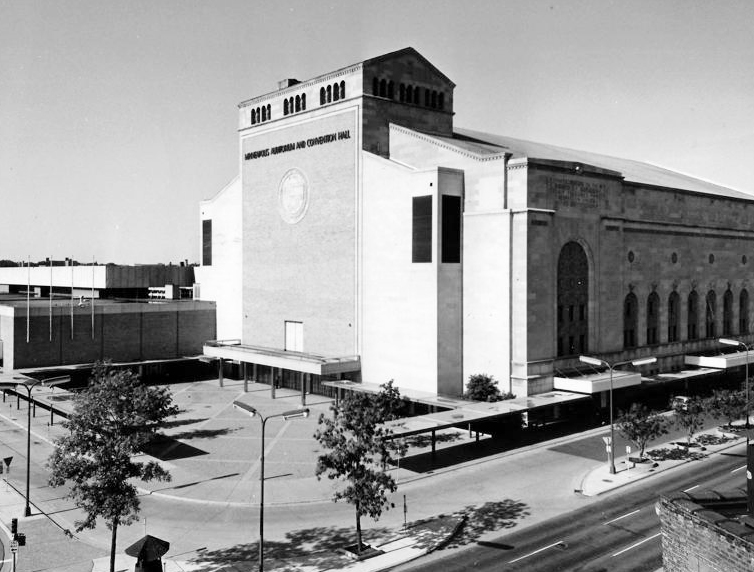
    The Minneapolis Auditorium

    From Twin Cities Music Highlights:
    “Bandleader Horace Heidt hosted a 2 1/2 hour musical review from the Minneapolis Auditorium on October 22, 1950, that was broadcast nationally over CBS radio.”

    The arena held 10,000 people and was built in 1927. It was demolished in 1988 to make way for the Minneapolis Convention Center.


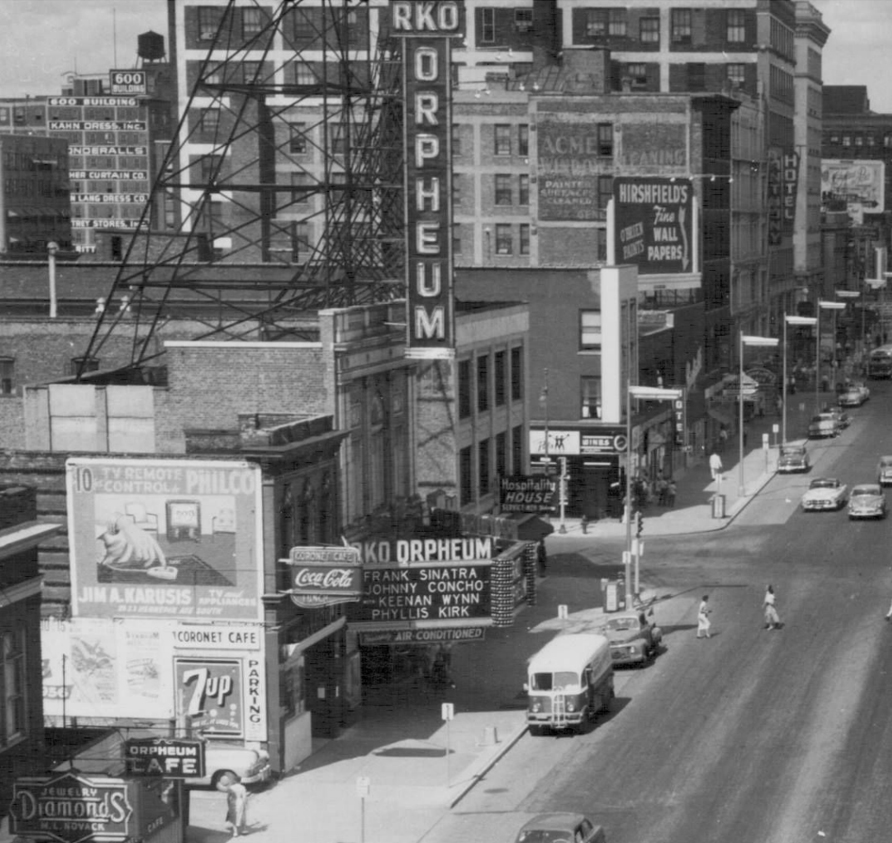
    The Orpheum Theater

    Fom Twin Cities Music Highlights:
    “The format was to show a movie and then the band would come out for a 15 minute session and then back to the movie. This went on all day and was one hell of a treat to pay a quarter to get in and be treated to all this tremendous big-band music. Big bands that appeared were Horace Heidt and his Musical Knights with the Triple-tonguing Trumpeters; Artie Shaw with “Little Jazz;” Roy Eldridge, fresh out of the Army, wearing high-water trousers; Sammy Kaye and his “So You Want To Lead A Band?” show.

    -Kenneth Stuart 

  • Dolores Keefe – My Choice

    Sophia Keefe’s interview with her grandmother Dolores Keefe in May of 2009. The assignment for school was to ask a relative to talk about an important choice they had made in their life.

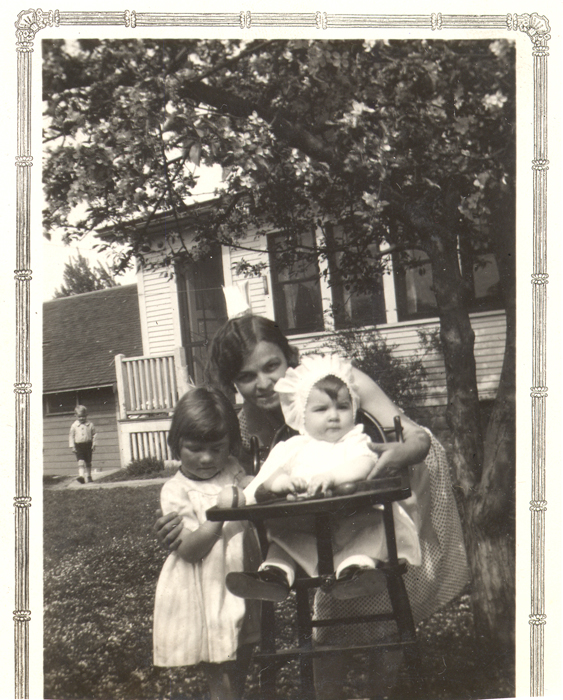
    Julia Kasmar with daughter, Dolores.

    My name is Dolores Keefe and I was born May 14th, 1928. Here is the story of my choice in life.

    The Great Depression

    Since I was born right before the 1930’s you probably know that I lived through it. It wasn’t that hard for my family in particular, or really the whole neighborhood, because everyone had the same things.

    1929 -Julia Kasmar with daughters Margie and Dolores. Son Robert is in the background.

    Toys for us were either made ourselves or we didn’t have any. Our parents did not have the time or the money to be able to buy us simple playthings.

    As for clothes, no one had that many things to wear. For girls, we had a school dress, a play dress, and a party dress. Boys had the same sort of thing except they had shirts and trousers.

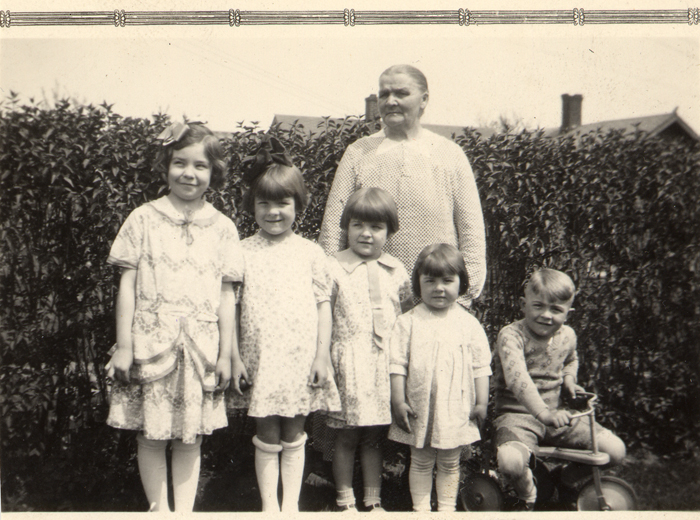
    1931 – Left to Right: Barbara Jalma, Margie Kasmar, Theresa Jalma, Dolores Kasmar and Robert Kasmar. Dolores’s Grandma Rose is standing behind them (Julia’s mother).

    Schools did not give out much paper homework because we couldn’t afford to print it much. Instead, we would take turns at the blackboard, one at a time, solving the day’s problems. Our subjects were arithmetic, English, social studies, and science.

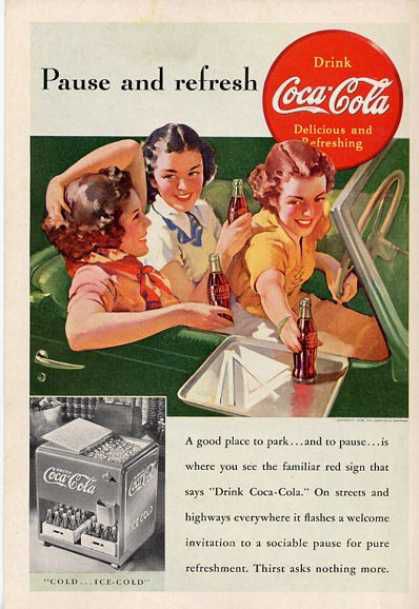
    After school we would go to the soda shop and buy a Coca-Cola, it was the new drink. The bottles were served ice cold and were glass, so you could see the condensation dripping down the sides. They tasted wonderful.

    But the best part were the tin bottle caps that we collected. We would save them up until we had five of them, and then we would give the caps to the man behind the counter and he would give us a pad of paper, which said Coca-Cola in big letters on the top. He would also give you a pencil. Everyone wanted one of those. It was the way that the company got money. 

    After school, a child was selected to clap the blackboard erasers. We had a schedule to find out whose turn it was to clap the erasers.

    I remember that I was in the school orchestra. I played the violin and loved it immensely. I loved the sound it made and smell of the wood and everything about it.
    Dolores’s Violin

    We had concerts a few times a year, and once a year, we would put together a record of our songs and of us playing them. That was very exciting. And all of the children looked forward to the time of year when we got to record ourselves.

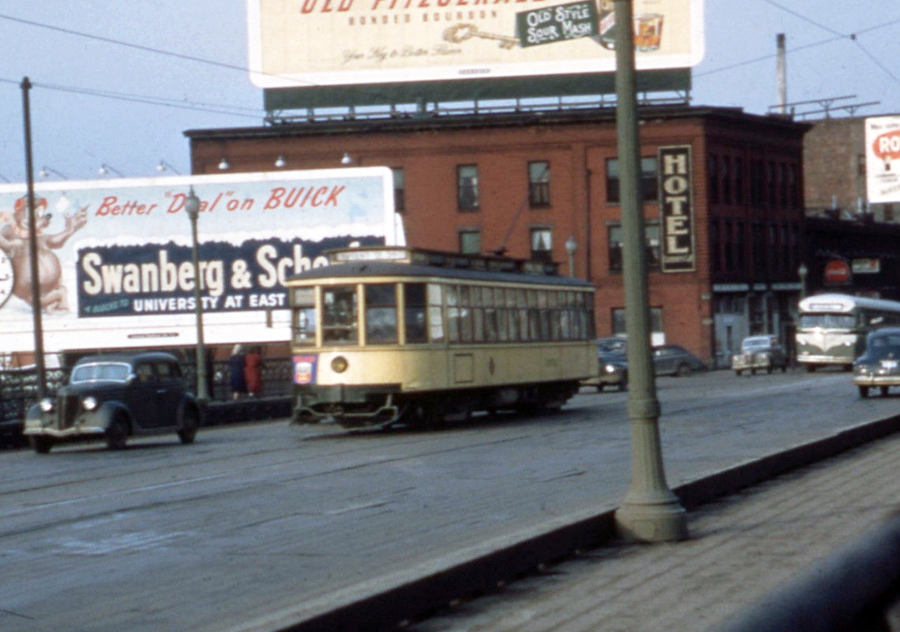
    We did not have any city busses, but we used trolleys, which had tracks all through the neighborhood. Because the trolleys could not turn, it was a drag to get home because the engineer would have to get out of the trolley and pull the cables to turn, which took quite a long time.

    Trolley in Minneapolis.

    The dentist in our city was one of the first dentists to use fluoride for mouth hygiene. A bunch of children would get our teeth cleaned, and then we would parade in a big group all around the neighborhood and smiling at everyone to be able to show off our beautiful white teeth. The dentist used us to advertise his new way of cleaning teeth. The people who saw our beautiful teeth would send they’re children to that particular dentist, and maybe even go to see him theirselves. That was basically the depression for me.

    World War II

    Then came World War II. It was much different than the depression was. I was in high school during the war. High school was 9, 10, 11, and 12 just like it is today.

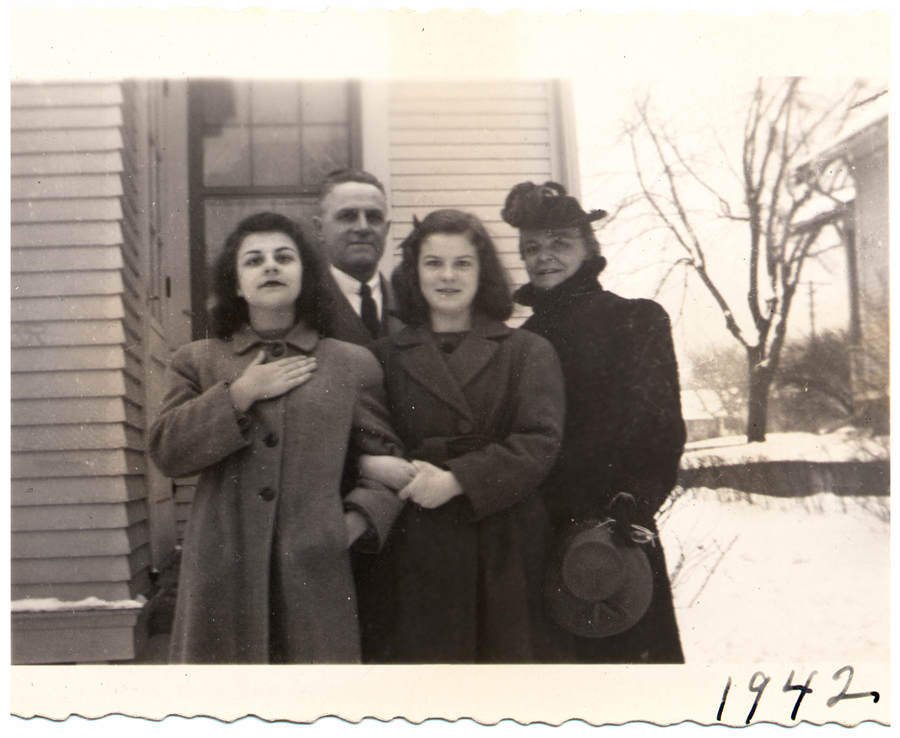
    1942 – Left to Right: Margie, Dolores’s Grandma Rose, Robert, Jeanne and Dolores.
    Dolores and Jeanne with parents Luke and Julia Kasmar.

    It was true that girls did not listen to all the information about the war.  We had no telephones, but we did have radios. Boys listened way more than the girls and all the time. This is because right after they got out of high school, they would be drafted to go and fight for our country.

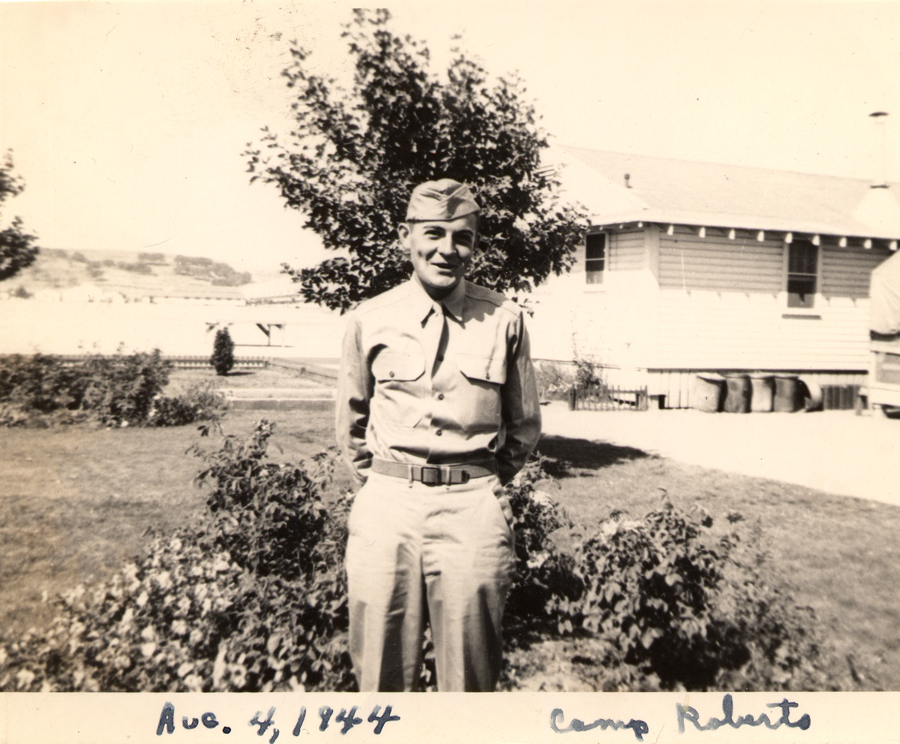
    Dolores’s brother Robert served as a Private First Class in the Army. Sent stateside after sustaining injuries on the troopship heading for Europe.

    As a matter of fact, three boys quit high school early. They went to the army lied about their age, and were sent overseas to fight. In a matter of months all three of the boys were killed while fighting. All of my schoolmates and us were shocked because we had known and been friends with these boys. And this was a very weird feeling to hear that one of your schoolmates was dead, killed in battle.

    After high school the girls had a matter of three career choices. One was marriage, which I was not considering at all at the time. Nursing and secretarial work were the other two choices. When I got out of high school I signed up for the Navy. But, just on the boat going in, I got sick on the water and had to go back to land. So the Navy was out.

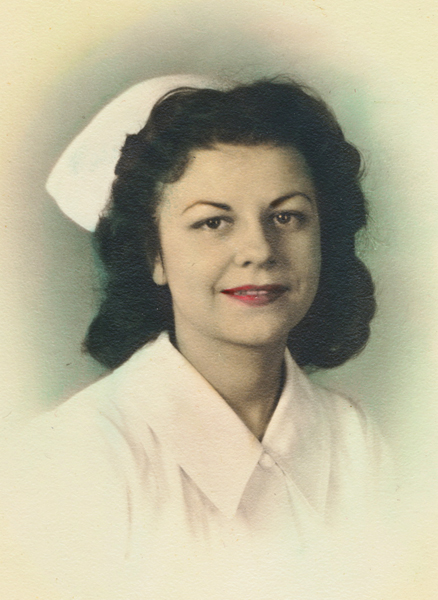
    The next job I applied to was an airline stewardess. I also failed in this attempt because my eyesight was not perfect, and I had to wear glasses. You had to have perfect eyesight to be able to work on the airlines. After that, I applied for the job as a nurse and finally got in.

    I was a surgical assistant for a doctor. I did that job for a pretty long time. It was strange that I could get on a boat, turn green, and start vomiting, but I could perform a surgery and cut some one open no problem. I spent years as that and still I did not think once about marrying. But then I met Richard Keefe. 

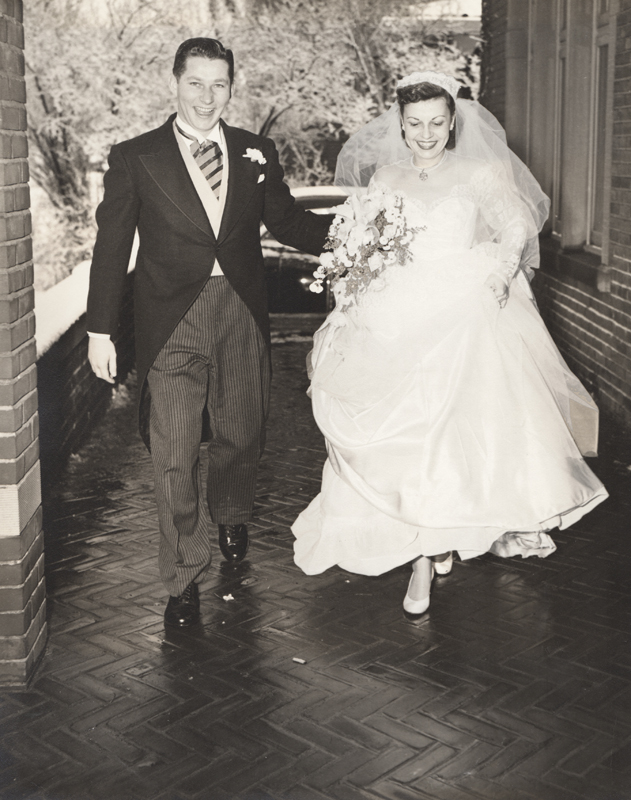
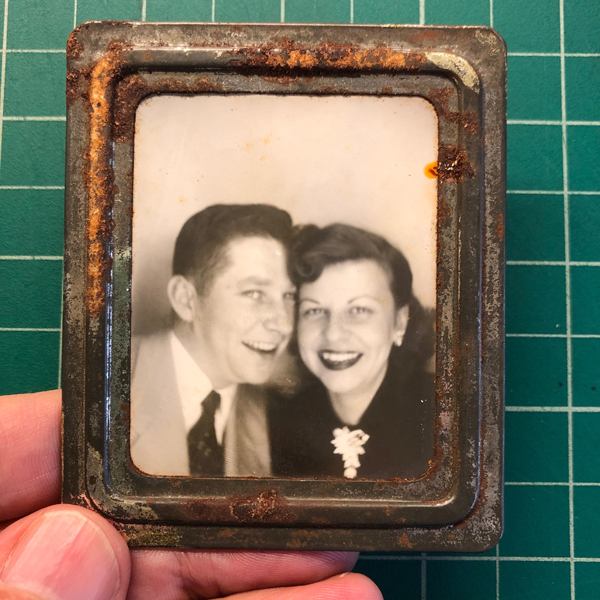
    Remember my saying that I wouldn’t get married? Well I lied. I have to admit that it was a conflict to make this decision. I loved Richard with all my heart, but I did not know if wanted to get committed. Well I decided that I did want to do this.

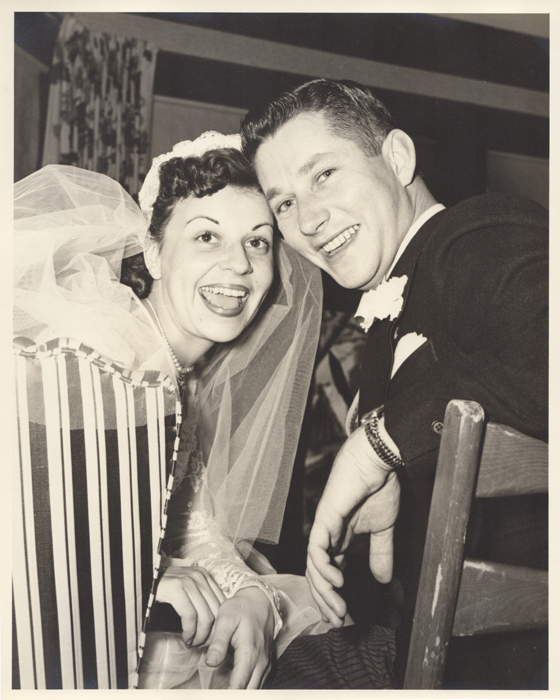
    Wedding Day – November 21, 1953

    So I got married, and had ten kids. Julie was the first, and my only girl.

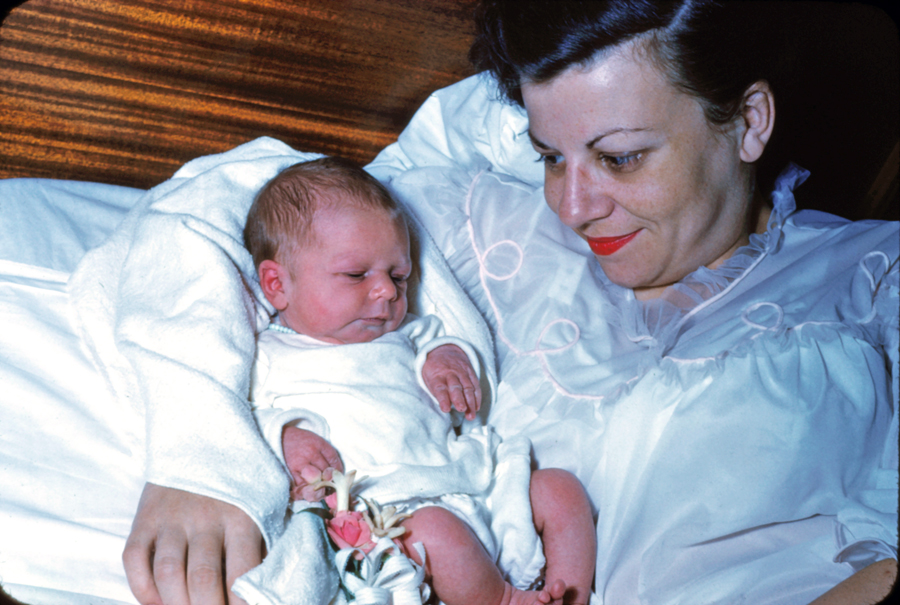
    Julie Keefe – born August 27, 1954.

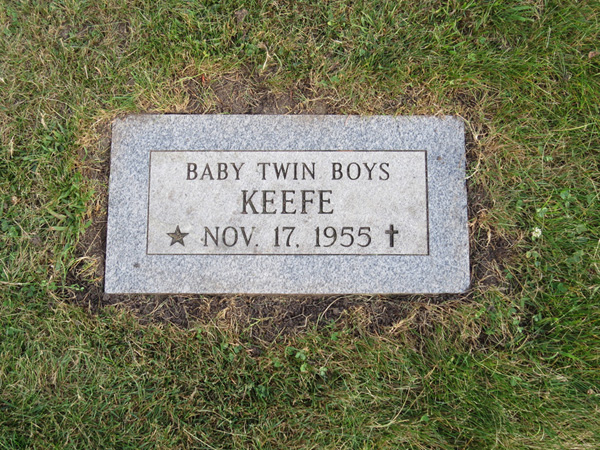
    A few years later I was pregnant again with twins. But something went horribly wrong. They were five months premature. The doctor got them out of my stomach, but a few hours later they died. I was heartbroken.

    It was very hard for me. I think what made that easier was the fact that I still had Julie back at the house waiting for me.

    Years later my first son was born, Mike. And after Mike came Paul. After Paul, Tim was born. A few years later after Tim, Tom arrived, and then Jim soon followed. Nick was born then, and finally Greg, the youngest.

    Although he is years younger than all of his siblings, Greg grew to be at LEAST a foot taller than all of them.

    Greg and Jim

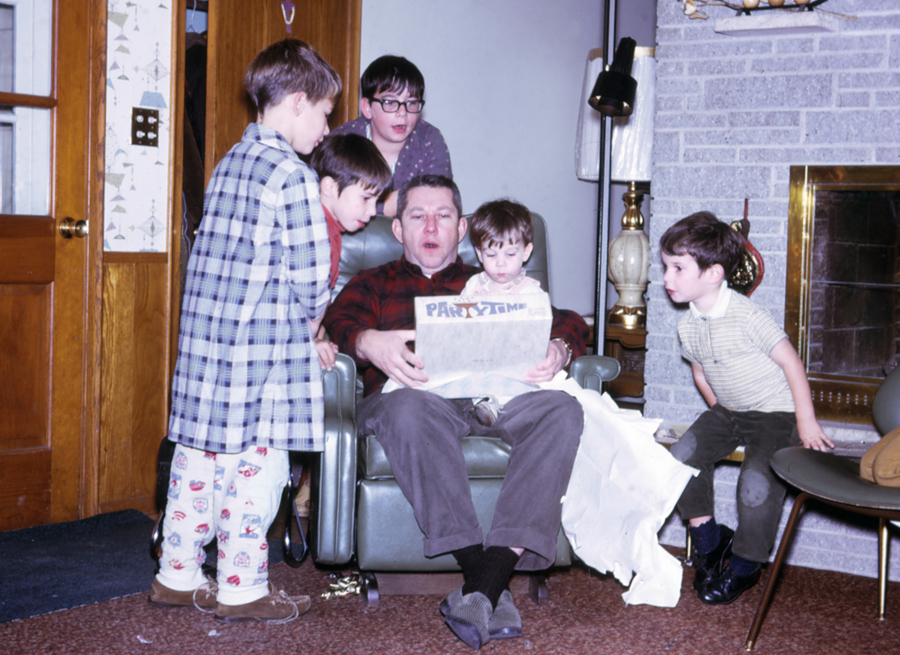
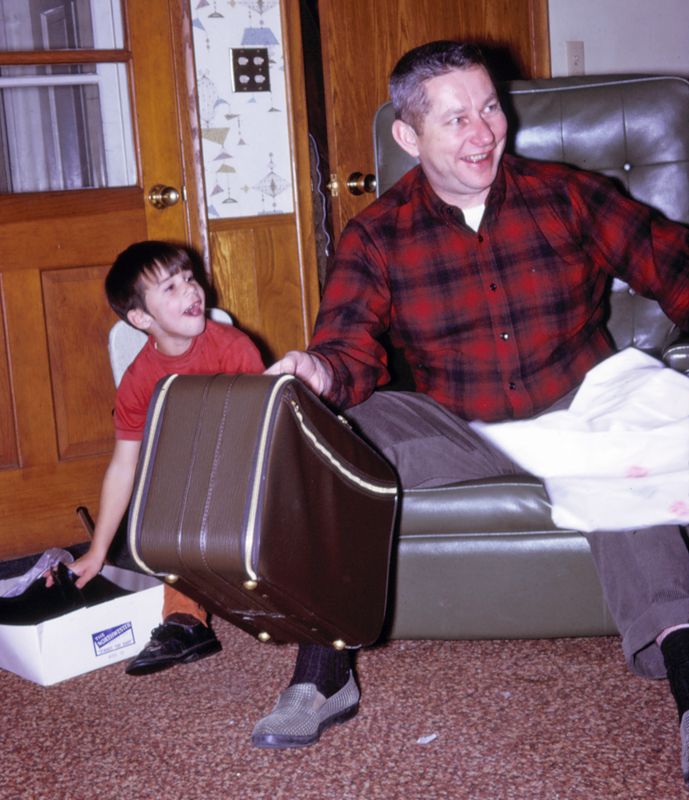
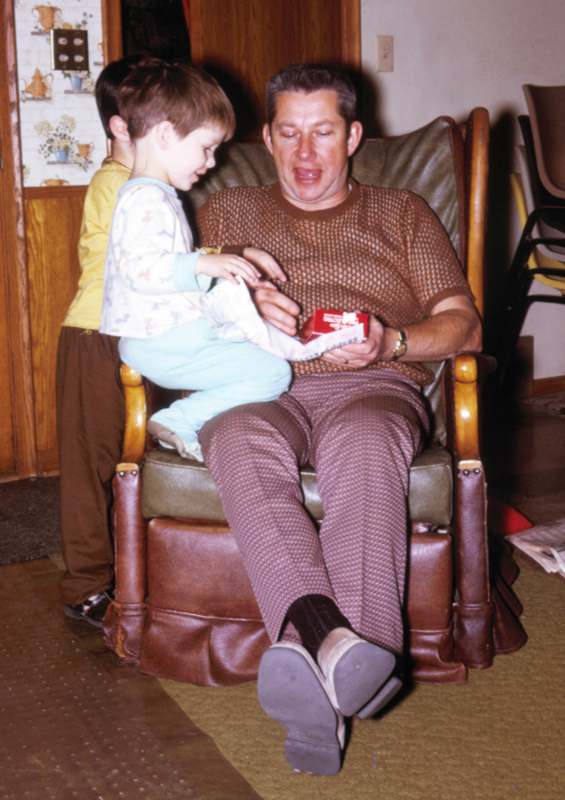
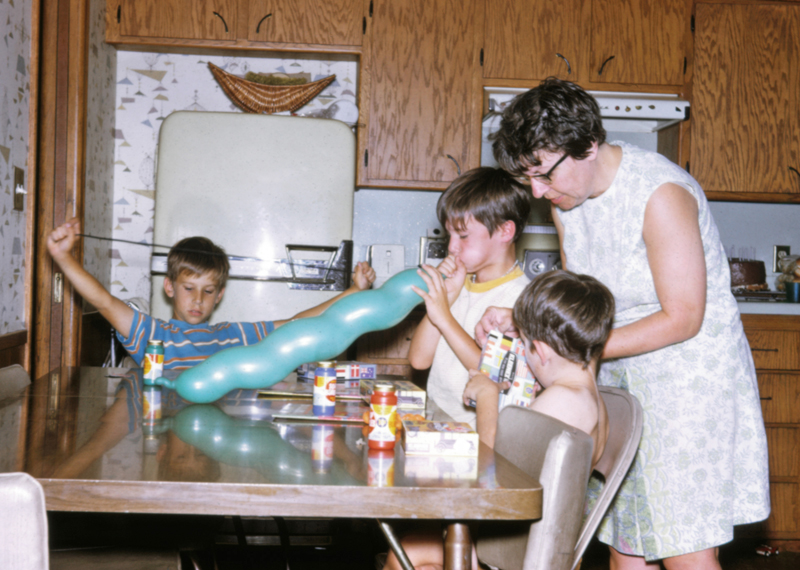
    What everyone enjoyed were all the birthdays we had. We had a thing called “Treats Around the Table” so everyone would get a gift even though it was only one person’s birthday. We all liked that. It also kept everyone from complaining.

    Treats Around the Table on Julie’s birthday in 1970.

     Most of my kids were born during the Korean and the Vietnam War. To tell you the truth, I paid little attention to the wars because I was very busy raising a family and taking care of the house. To tell you the truth, I don’t even remember which one happened first! I did not even know anyone that was in it. It was nice to be able to ignore a war when it is going on, and pretend that people aren’t getting hurt every day.

    Since Julie was the only girl, she moved out soon after she was married and she lives in Colorado. Mike married Liz, and they now live in Delaware with 10 kids of their own. Paul married Jodie, and has 4 kids. Tim married Diane and has 4 kids also. Tom has two daughters, Heather and Crystal. Jim married Deb, and has 4 kids. Nick is not married and has no kids. Greg has two daughters. So I have many grandchildren.

    My Choice

    I simply decided that I could not live without my husband. I stopped working when I married.

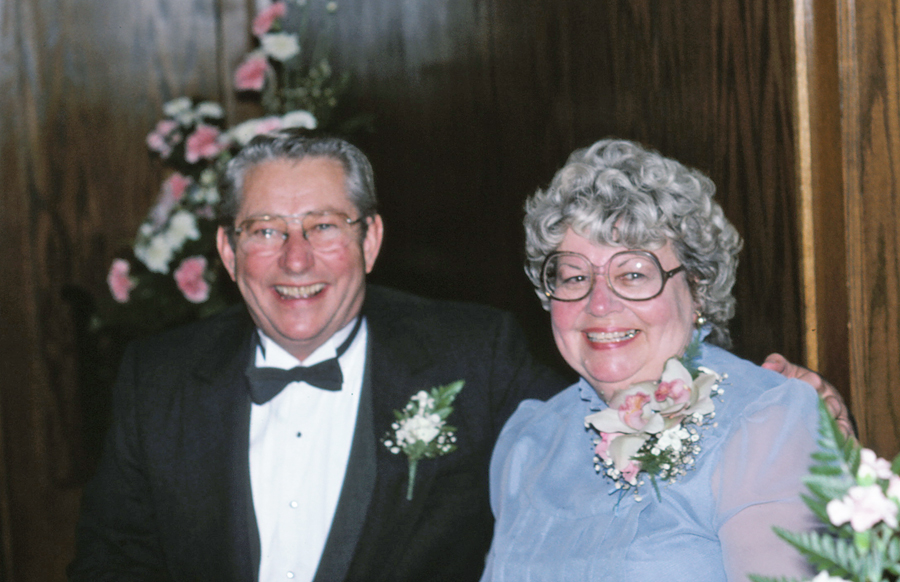
    Dick and Dolores Keefe at Tim and Diane’s wedding in 1984.

    As for the twins, they would have been in their 50’s today.

Experience thrilling casino games and sports betting anytime, anywhere. With fast access and smooth navigation, the melbet turns your phone into a top-notch gaming destination.

Get started with a slotozen no deposit bonus code and explore the casino’s offerings without funding your account.